Home: Marginalia
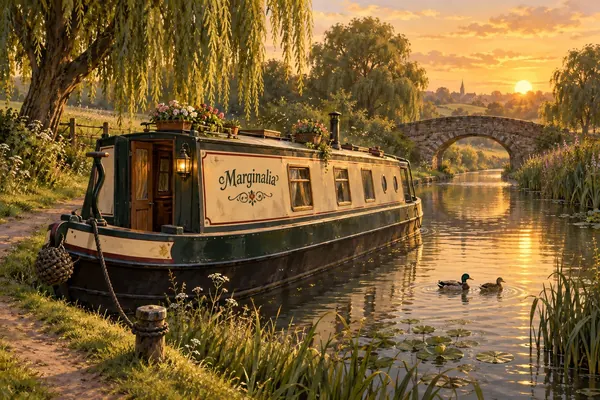
Start on Cara’s narrowboat on a golden canal evening: a calm place to learn the controls, poke through her life (the chessboard, the letter, the ducks named after her examiners), and try the phone before the expedition.
Ruins are just houses that have been patient.
CARA is her name. It is also what this is: Call And Real-time Adventure, a game you play by being on the phone to the person inside it.
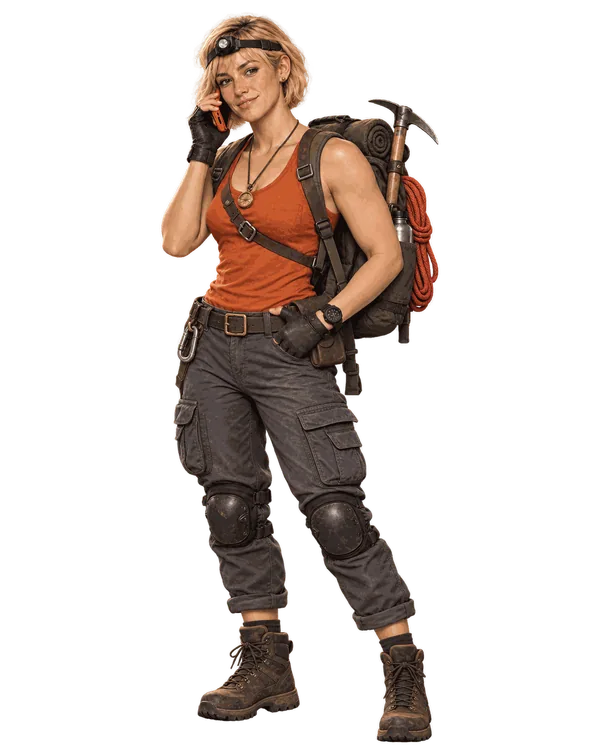
Dr Cara Holloway is climbing into a valley where a river vanishes underground. You are Base: the map, the scans, and the sat-link. Play the expedition with a keyboard, or pick up the phone and call her, stay with her, and see the ruin through her eyes. She answers as herself: nervous on a ledge, funny mid-climb, conspiratorial over her mother’s notebook. Alone she is capable; with you on the line she is brilliant: she takes the bolder line, spots more, and jokes while she does it.
The line runs on a real-time voice model (Google’s Gemini Live by default; OpenAI’s GPT Realtime is built in too) with your own API key, stored only in this browser. How the call works. Play as Cara, Benny, Nkechi, Wren, Hira or Idris, and turn any call into a video call in the same world. Eighteen campaigns, ninety-four chapters, each playable on its own.
Start on Cara’s narrowboat on a golden canal evening: a calm place to learn the controls, poke through her life (the chessboard, the letter, the ducks named after her examiners), and try the phone before the expedition.
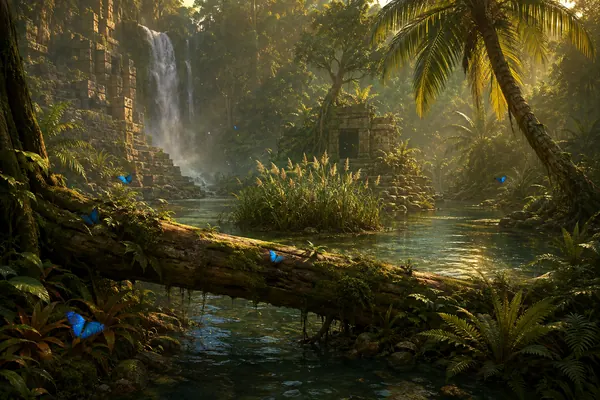
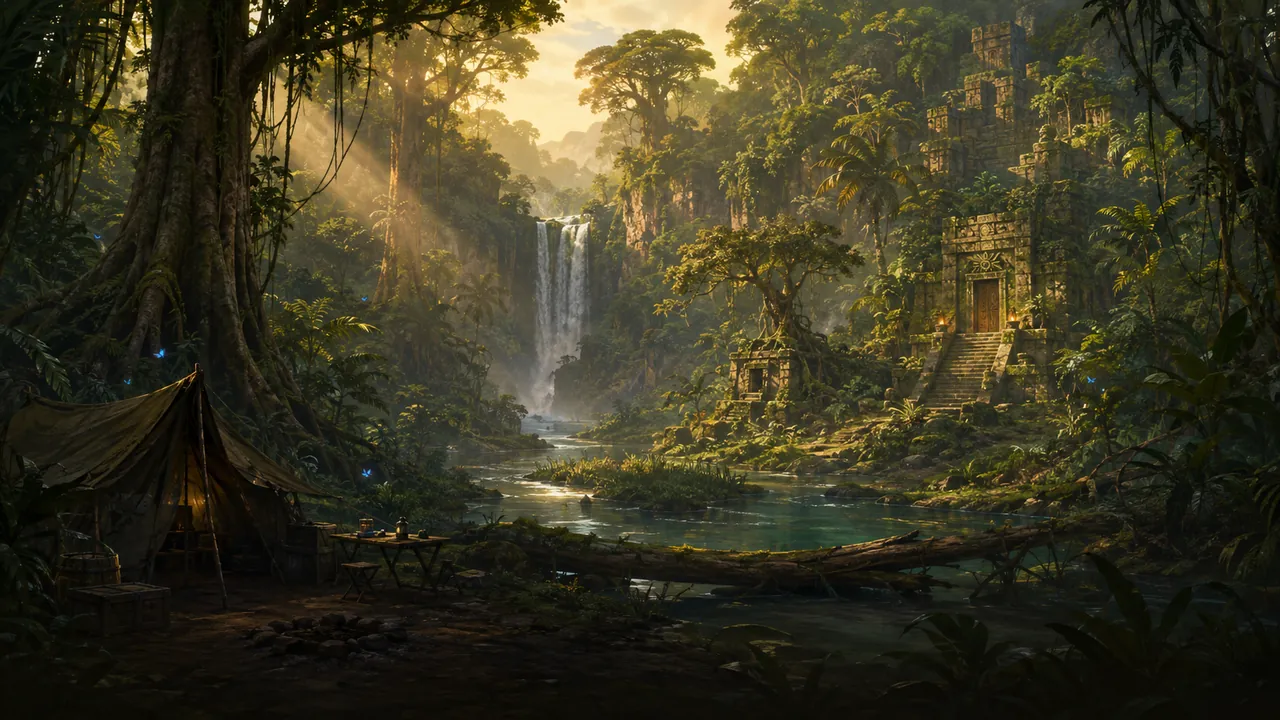
A procedurally grown jungle: kapoks and palms, ferns, a river with a fallen-log crossing, cliffs to climb, a waterfall, and a stepped temple with a gate that only three Sun Stones can open.
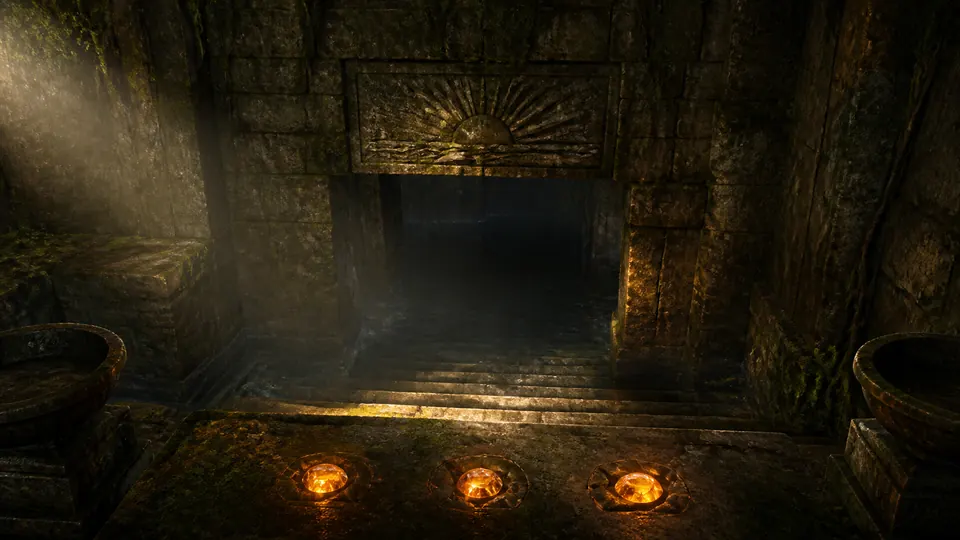
Below the water line: a flooded cavern under the temple with an eye of daylight in its roof. Turn three stone sluice wheels to drain it step by step, follow the survey tags her mother left a fortnight ago, document the Sun Boat, and climb the outflow to dawn.

Third-person camera, motion-captured animation, run, jump, mantle up ledges and cut stone blocks, swim the river, read stelae, solve the altar and descend the Sunken Stair.
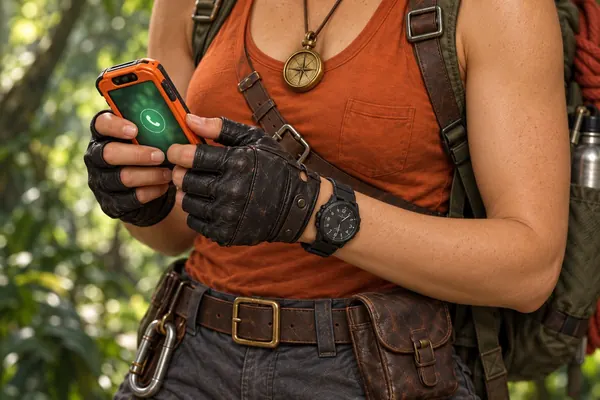
Cara has a phone and a life. Ring it at the survey camp and she talks about her mother, her father’s chess moves, the boat. Ring it on a ledge and she is glad of the company. Alone she is capable; with a good voice on the line she is brilliant: she takes the bolder line, spots more, jokes, and the team chimes in.
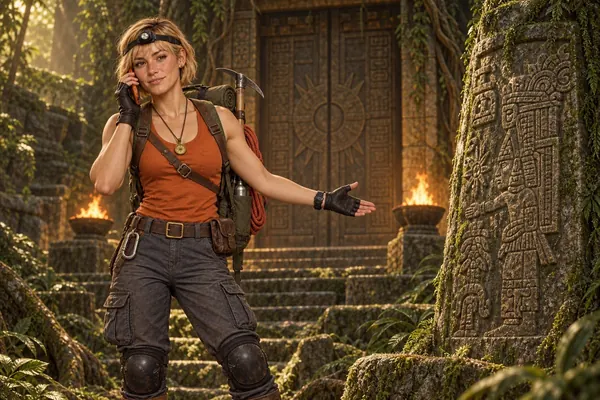
While you are on the line she can also act on what you say: “head for the temple”, “what can you see?”, “read the left column”. She tells you what happened, and says no when it is a bad idea. Presence first; the verbs come with it.
Every chapter plays on its own with its own save; each campaign hands over chapter to chapter. The Sun Stones is seventeen days: the last page of her mother’s notebook has been unfinished since 2003, and Cara sets out to finish it in secret, as a twentieth-season present. The Lantern Coast follows a 1789 letter along Britain’s Atlantic edge. México: Cities of the Sun documents five real sites in five days, and keeps its facts straight. Pakistan: The Indus Book walks five thousand years of water and stone along one river with Hira, for her father’s book. Perú: The Water Road follows the Inca channels that still run, from Cusco to Machu Picchu, with Wren on the rope and an engineer’s forty-one brass pins to find. England: The Matter of Britain is five Arthurian places in five days to the solstice sunrise at Stonehenge, with Idris and a television crew whose presenter brings his own finds. Greece: The Games Dial is five days and four sanctuaries, checking the labels for a working model of the Antikythera mechanism’s games dial and measuring four running tracks that are all six hundred feet long and none the same length. Nigeria: The Lost Wax is five days and about three thousand years with Nkechi — Nok, Igbo-Ukwu, Benin City, Ile-Ife and Lagos — writing the file for a copper-alloy head that an English saleroom called modern and a retired teacher sent home. China: The Post That Got Through follows half a Tang letter from 767 east from the Mogao Caves to a reading room in Beijing, to find out whether it arrived. Egypt: The Names on the Wall is five days making a schools exhibition from Giza to a sunrise at Abu Simbel, looking for the name of somebody who actually did the work at every one of them. Iraq: The Reed and the Clay is five days copying five signs for a school room in Baghdad that will be the first tablet house in four thousand years, from the first receipt ever written at Uruk, through a back-street school at Ur, a brick stamp at Babylon and a rejoined palace slab at Nimrud, to the alphabet that ended the wedge at Hatra. Türkiye: The Order of Things is five days and about eleven thousand years — Göbekli Tepe, Çatalhöyük, Hattusa, Ephesus and Cappadocia — rewriting five wall panels that are each wrong in a different way, for a gallery in Ankara that prints at seven on Saturday.
Alone she is capable: every chapter can be finished with a keyboard. With a good voice on the line she is brilliant, and each of her three feelings reaches its best: Nerve becomes Confidence, Inspiration becomes Spark, Trust becomes Bond. Nerves are normal: a hard landing gives her butterflies, and patience, one clear foothold and a reason settle them fast; hurrying and mockery cost you her trust. There is no bar on the screen. You hear it in her voice and see it in how she climbs.
Arizona-born, Stanford then London, PhD in water temples, walked out of academia rather than sign finds over to a collector. Talks to artefacts. Names her ropes. Says “Well.” before bad news.